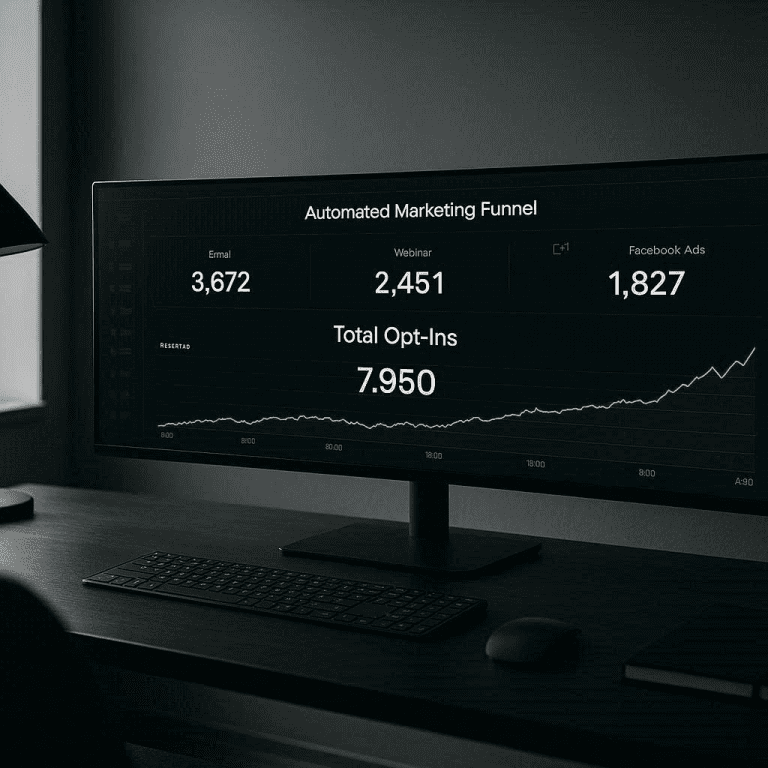
4 Brutal Steps in an AI Agent Consulting Workflow to Double Revenue in 2026
The transition from manual labor to automated systems has reached its absolute peak. To capitalize on this, mastering a highly structured AI agent consulting workflow is the single most lucrative opportunity available in 2026. As massive organizations struggle to transition from static, basic artificial intelligence tools to fully autonomous digital workforces, the demand for specialized architects has skyrocketed globally.
Businesses are quickly discovering that generic, out-of-the-box generative outputs are severely limited. These basic tools are completely useless if they cannot securely utilize proprietary company data or automate complex, multi-step operations. This is exactly where the elite automation specialist steps in.
By bridging the gap between raw foundational models and integrated, goal-oriented digital employees, you provide massive, measurable value. By designing and deploying these frameworks, you can help modern enterprises save hundreds of hours and thousands of dollars every week. This comprehensive case study provides an exhaustive, step-by-step roadmap to building, pricing, and scaling a highly profitable business leveraging an elite AI agent consulting workflow.
The “Quick Answer” / Key Takeaways Box
- The Paradigm Shift: Traditional rules-based automation breaks easily. Modern autonomous agents utilize Large Language Models (LLMs) to reason, adapt, and execute complex sub-tasks dynamically.
- The 3 Agent Tiers: To scale, you must understand Reactive Agents (search-based), Learning Agents (data-trained), and Collaborative Agents (multi-agent systems operating together).
- The No-Code Toolkit: You do not need a computer science degree. An effective AI agent consulting workflow relies heavily on connecting powerful APIs via visual glue like Make or Zapier.
- High-Ticket Pricing: Never charge by the hour. Charge a $2,000 to $10,000 setup fee for the system architecture, plus a $1,000 to $4,000 monthly retainer for API maintenance and optimization.
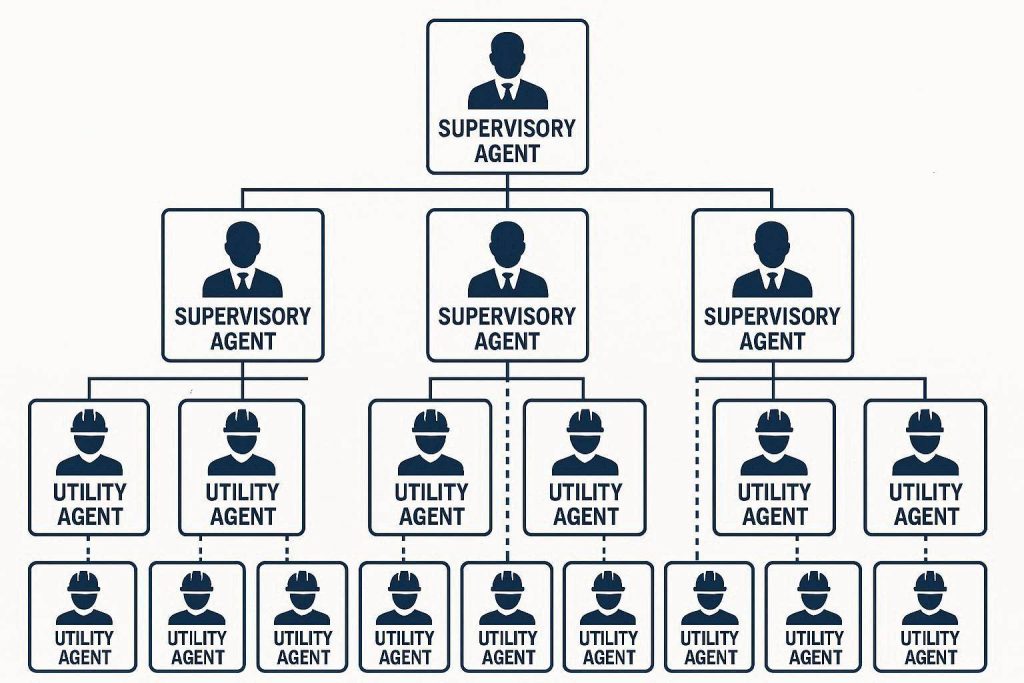
- Enterprise Topologies: Scale to massive corporate clients by deploying Supervisory Agents that delegate tasks to specialized Functional and Utility Agents.
Why an AI Agent Consulting Workflow is the Ultimate High-Ticket Model
To build a thriving, high-revenue practice, you must first understand the fundamental shift occurring within modern enterprise operations. Traditional automation relied entirely on strict, rules-based programming scripts. If a real-world situation deviated even slightly from the programmed script, the entire system broke down, requiring expensive human intervention.
Modern autonomous agents solve this massive limitation completely. Powered by advanced Large Language Models, these digital workers are capable of invoking dynamic reasoning. They can break down highly complex corporate goals into manageable sub-tasks and make high-quality, contextual decisions in real-time.
When pitching your services to potential B2B clients, your primary value proposition rests on two undeniable pillars: saving time and saving money. A well-designed digital agent can complete five hours of tedious, routine administrative work in under two minutes. This entirely eliminates the need for businesses to hire additional junior staff for busywork.
It allows their existing human teams to focus exclusively on high-value, strategic, revenue-generating activities. This extreme Return on Investment (ROI) is the core driver behind the rapid global expansion of this industry. Within a professional AI agent consulting workflow, you will typically design three distinct types of digital assistants for your clients.
The Three Archetypes of Digital Workers
Reactive Agents: These function very similarly to highly advanced search engines. They respond to immediate prompts with accurate, grounded information but generally lack sophisticated short-term or long-term memory.
Learning Agents: These agents possess direct, secure access to a business’s proprietary database or document repository. They analyze deep context, provide custom answers based entirely on internal company data, and continually refine their future outputs based on human feedback.
Collaborative Agents: This is where the true, scalable power of an AI agent consulting workflow is unlocked. Multiple highly specialized agents cooperate within a unified, seamless framework. For instance, one agent summarizes an incoming document, a second agent drafts the response, and a third logs the interaction into the company CRM system autonomously.
The Evolution of Large Language Models in Enterprise Automation
The Modern No-Code Technical Toolkit
A massive misconception in this industry is that you need an advanced computer science degree to build high-performance, enterprise-grade systems. In reality, the most successful firms operate using a strict “no-code” or “low-code” approach. Your role is not to write raw neural network code.
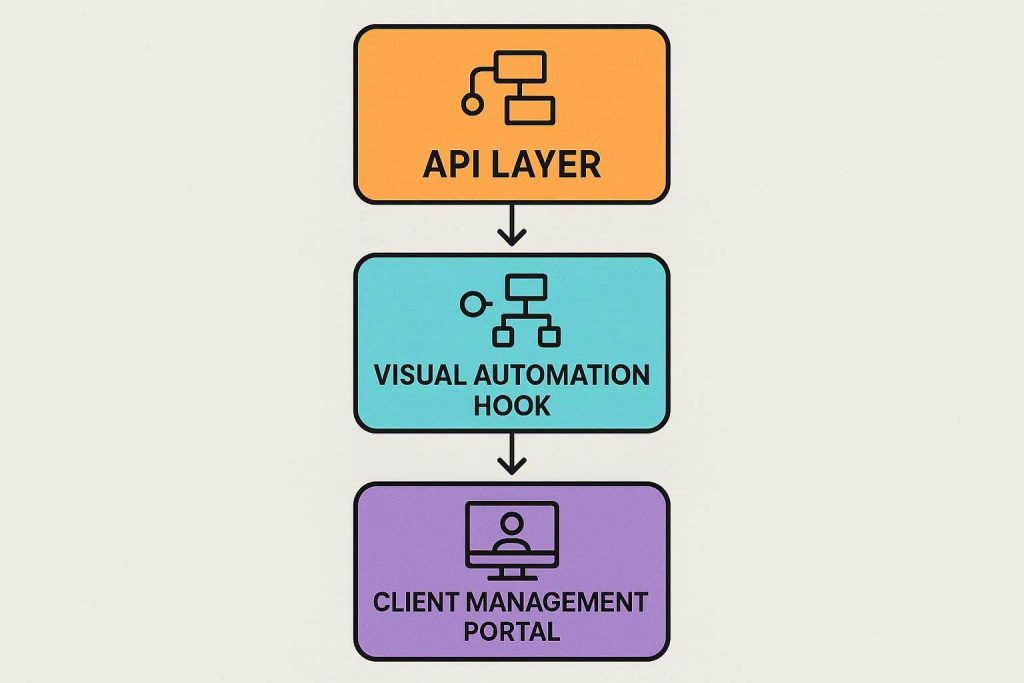
Your role is to act as a high-level digital architect who seamlessly connects existing software systems. This supreme accessibility makes the AI agent consulting workflow a highly attractive and rapidly scalable agency model. Your entire technical toolkit will rely heavily on three core components working in unison.
1. Wrapper Applications (The API Layer)
These are pre-built software-as-a-service models that expose incredibly powerful APIs. Instead of building complex models from scratch, you connect your clients’ workflows directly to these specialized cloud engines.
For text and complex reasoning, you utilize the APIs of OpenAI, Anthropic’s Claude, or open-source alternatives. For voice and audio cloning, you integrate specialized engines like ElevenLabs for hyper-realistic voice generation. For visual product analysis, you tap into image-generation APIs.
2. Automation Hooks (The Digital Glue)
To connect these disparate API engines seamlessly, you will use dedicated automation hooks. This is the absolute backbone of your AI agent consulting workflow.
Visual routing tools allow you to push and pull data between thousands of everyday applications. You can connect Gmail, complex Excel databases, Slack, and native CRMs without writing a single line of backend code. Mastering these visual node-based platforms is your first mandatory step toward scaling your agency.
3. Client Management Portals
To deliver a high-ticket, white-labeled experience, you must leverage robust reseller software portals. These platforms allow you to create completely separate, highly secure dedicated workspaces for each of your paying clients.
You keep their proprietary data segmented and invite their human team members into a branded dashboard. By utilizing a white-label framework, you can justify premium consulting fees. You are giving clients access to a customized portal featuring specialized tools like custom transcribers, data classifiers, and autonomous coders under your own agency branding.
Essential SaaS Tools for Your AI Agent Consulting Workflow
To construct and maintain these powerful systems without dealing with server crashes or broken data pipelines, you must utilize premium enterprise software. Relying on free, basic integrations will inevitably break and destroy your client trust.
1. Enterprise Automation Routing
You must build your data pipelines using professional-grade routing software. Platforms like Make.com or Zapier provide the visual node interfaces necessary to construct complex, multi-step digital workers. These tools allow you to manage your client infrastructure professionally.
2. Premium Client Portals (via Impact)
When you deploy a digital worker, your client needs a clean, branded dashboard to interact with it. Utilizing white-label software solutions like HighLevel allows you to host their custom chatbots, track their incoming leads, and manage their automated SMS follow-ups all in one place. You charge the client a premium retainer for access to this customized environment.
3. Frictionless Invoicing and Retainers
When you close a $10,000 corporate consulting deal, your payment collection process must be utterly flawless. Utilize Stripe to generate secure, recurring subscription links for your monthly maintenance retainers. This automates your agency cash flow and ensures you are never manually chasing down overdue client invoices.
Step-by-Step: Deploying a Specialized WordPress Chatbot
One of the easiest, fastest entry-point services to sell within an AI agent consulting workflow is a custom-trained customer support chatbot. Using specialized plugins, you can build, train, and deploy an autonomous chat assistant on a client’s website in under an hour. Here is the exact procedure to configure this high-value digital asset.
Step 1: Installation and Feature Configuration
First, log securely into your client’s website admin dashboard and install the specialized chatbot application. Once activated, navigate directly to the bot behavior settings. Enable the FAQ module and the lead data collection features to capture valuable customer information autonomously.
Set the initial welcome message to be highly conversational and engaging. Most importantly, turn on the “Humanoid Typing Behavior” parameter. This adds a realistic, variable delay to the bot’s responses, making it feel exactly like a real human support representative is typing on the other end.
Step 2: Enabling Long-Term Memory
You must manually enable the long-term memory feature within the application settings. This is absolutely crucial for a premium AI agent consulting workflow.
It allows the bot to actively remember the user’s name, their previous specific questions, and the deep context throughout the entire conversation. This dramatically improves the end-user experience and prevents the frustrating loop of users having to repeat themselves to a machine.
Step 3: API Integration and Strategic Site Training
Create a new, dedicated secret API key inside your client’s foundational model account and paste it into the plugin settings. Next, you must define the training parameters. Do not make the amateur mistake of training the bot on the entire website, which wastes massive amounts of tokens and escalates API costs unnecessarily.
Instead, select only the five or six most critical conversion pages. In the core System Prompt field, provide highly detailed information about the client’s business, including exact pricing models, strict service limitations, and operating hours. This core prompt acts as the digital worker’s permanent operating manual.
Step 4: Resolving Token Limit Errors
During initial setup, many practitioners run into a massive error where the bot stops responding or cuts off mid-sentence. This is always caused by an insufficient token response limit. To fix this, access the model settings and manually increase the response token limit to 5,000 or 10,000.
You must also adjust the “Temperature” tuning. Set the temperature parameter strictly between 0.5 and 0.8. A lower temperature makes the bot highly focused, predictable, and factual, which is perfect for business environments. Mastering these granular tweaks is essential for a flawless AI agent consulting workflow.
[INTERNAL LINK: The Ultimate Guide to Prompt Engineering for Digital Agencies]
Enterprise-Grade Architecture: The Corporate Blueprints
As you successfully scale your agency, you will inevitably target larger mid-market and massive enterprise clients. To service these massive organizations, you must look completely beyond single-agent chatbot setups. You must adopt sophisticated, multi-agent collaborative frameworks.
Understanding enterprise-grade system design is a major milestone in your AI agent consulting workflow. Massive enterprise environments utilize a beautifully structured taxonomy of cooperating digital assistants. By studying these advanced blueprints, you can design professional-grade, highly resilient workflows for your corporate clients.
The Four Pillars of Enterprise Agent Topologies
In an enterprise-grade collaborative workflow, digital agents are organized strictly into four distinct, hierarchical roles.
- Conversational Agents: These act as the friendly front-end interface. They communicate directly with human users, external software platforms, or industrial devices using natural language processing.
- Supervisory Agents: These are the orchestra leaders of your AI agent consulting workflow. They receive requests from the conversational agents, formulate a step-by-step logical reasoning plan, assign micro-tasks to specialized agents, and run strict quality checks on the final output.
- Functional Agents: These digital workers adopt highly specific organizational personas. They operate as a digital hiring manager, a field technician, a receivables clerk, or a dedicated customer support agent.
- Utility Agents (Task-Based): These are low-risk, highly specialized bots that execute single, repetitive tasks. They run database queries, generate ad copy, fetch secure files via RAG (Retrieval-Augmented Generation), or schedule calendar meetings autonomously.
Enterprise Case Studies: Cross-Functional Workflows
To truly understand how these complex roles cooperate, we must explore real-world workflows. Replicating these frameworks allows you to pitch massive, six-figure contracts within your AI agent consulting workflow.
Case Study 1: Predictive Maintenance (SCM)
In an industrial factory environment, maintaining equipment uptime is incredibly critical. When a piece of machinery reports an overheating issue, a specific workflow is triggered. A maintenance technician dictates the symptoms into a tablet.
The Supervisory Agent immediately plans the recovery action. It directs a Utility Agent to retrieve technical schematic diagrams and generates a step-by-step troubleshooting guide for the human technician. Once the technician confirms a faulty part, a Procurement Functional Agent takes over autonomously to submit a purchase order to an approved vendor.
Case Study 2: Automated Payables Process (ERP)
The traditional procure-to-pay corporate cycle takes days and requires extensive, error-prone manual data entry. A premium AI agent consulting workflow compresses this entire process into a matter of minutes. An Accounts Payable Functional Agent triggers utility bots daily to harvest incoming invoices from shared email inboxes and secure vendor portals.
Supervisory Agents map the data, predicting and populating complex ledger code combinations. Other utility agents automate the internal approval routing and initiate bank payment steps. If a complex anomaly is detected, a routing agent instantly flags the specific invoice and alerts a human manager for rapid validation.
Customer Acquisition and High-Ticket Pricing Models
Once you have mastered the technical and architectural aspects, you must focus on building a repeatable sales engine. Do not try to sell your automation services to everyone on the internet. You must focus intensely on industries that manage high volumes of proprietary data or have incredibly intensive administrative workflows.
Target law firms, massive dental practices, insurance agencies, and mid-sized real estate brokerages. This specialized, laser-focused targeting is the first rule of client acquisition within a profitable AI agent consulting workflow.
The Direct Outreach Strategy
To find high-value prospects, combine local geographic targeting with professional B2B networking. Search Google Maps for target businesses in a specific wealthy city. Click on their corporate website, locate the managing partner’s name, and find their profile on LinkedIn.
Before reaching out, audit their website brutally. Identify obvious, painful friction points, such as the total lack of an interactive chatbot or incredibly slow contact forms. Send a brief, highly personalized message via LinkedIn DM highlighting the specific flaw and offering a custom digital worker to fix it.
Structuring Your Premium Agency Fees
Do not ever underprice your technical expertise. Businesses are highly willing to pay premium corporate fees because the direct ROI of your service is mathematically undeniable. You must structure your agency fees into two non-negotiable components.
First, charge a massive Setup Fee ranging from $2,000 to $10,000. This covers the initial system design, complex API integrations, historical data collection, and rigorous beta testing. Determine this fee based entirely on the complexity of the specific corporate workflows requested.
Second, charge a Monthly Recurring Retainer ranging from $1,000 to $4,000. This covers ongoing system optimization, advanced prompt tuning, API monitoring, and premium software access. Recurring retainers are the ultimate financial engine of a successful AI agent consulting workflow, providing you with highly predictable, massive monthly cash flow.
Strategic Critique: Stress-Testing the Concept
What are the problems with this idea that we are not seeing?
The primary problem with operating a high-ticket AI agent consulting workflow is the extreme volatility of the underlying API infrastructure. Because this business model relies entirely on third-party foundational models (OpenAI, Anthropic) and routing software (Make, Zapier), you have zero control over the core technology. If OpenAI updates a model, deprecates an endpoint, or changes their data-handling policies overnight, your client’s entire enterprise workflow could instantly break. You are selling “stability” to corporate clients while building your infrastructure on constantly shifting, highly experimental digital sand.
What assumptions are we making that might not be true?
We are making a massive assumption that corporate employees will actually adopt and trust the digital agents you deploy. In reality, implementing AI in a traditional workplace often faces severe, aggressive pushback from human staff who view the technology as a direct threat to their job security. Even if you build a flawless “Functional Agent” to handle accounts payable, if the human accounting team refuses to use it or actively sabotages the data inputs out of fear, the system will fail to generate any ROI, resulting in a canceled retainer contract.
If this idea failed, what would be the most likely reason?
If this consulting agency failed, it would most likely be due to a massive failure in setting realistic client expectations. Salespeople in the AI space frequently over-promise the capabilities of LLMs, selling them as flawless, omniscient digital employees. When the deployed agent inevitably hallucinates a fact, sends an incorrect email, or struggles with a complex edge-case scenario, the client will immediately lose all trust. Failure in this industry almost always stems from over-selling the “magic” of AI and under-delivering on the required human-in-the-loop oversight mechanisms.