7 Powerful Steps to Launch High-Ticket SaaS Affiliate Funnels on Pinterest in 2026
The landscape of passive digital income has undergone a massive structural shift, leaving traditional consumer-product affiliate marketers fighting over pennies. If you want to scale a truly asymmetric digital asset while working a demanding primary career, you must completely abandon low-commission retail programs. Instead, modern digital entrepreneurs are deploying highly automated high-ticket SaaS affiliate funnels on Pinterest. By targeting business-to-business (B2B) professionals, freelancers, and corporate managers who desperately need software solutions, you can lock in massive recurring monthly commissions.
Executing high-ticket SaaS affiliate funnels on Pinterest allows you to leverage a visual search engine that buyers already use to solve complex operational problems. In this comprehensive case study, we will break down the exact automation workflows, AI generation pipelines, and visual traffic strategies required to build a compounding software affiliate empire in under two hours a week.
The “Quick Answer” / Key Takeaways:
- The Recurring Revenue Advantage: Transitioning from physical products to SaaS (Software-as-a-Service) allows you to earn 20% to 50% recurring commissions every single month a user remains subscribed.
- The Template Library Hook: B2B professionals do not click on generic software ads. They click on free, highly specific problem-solving templates (like Notion dashboards or HR scripts) that naturally require premium software to operate.
- Automated Pinterest Traffic: Pinterest operates as a visual search engine, not a social feed. By bulk-creating template graphics via Canva, your assets remain discoverable for years, driving perpetual traffic to your funnels.
- The AI Agent Engine: You can fully automate the ideation, copywriting, and SEO tag generation process by deploying an autonomous AI agent, reducing your manual workload to mere minutes per week.
The Financial Logic Behind High-Ticket SaaS
Most beginner affiliate marketers make the fatal mistake of promoting consumer goods on Amazon, earning a dismal 3% commission on a one-time transaction. This requires an unsustainable volume of continuous traffic to generate meaningful wealth. High-ticket SaaS affiliate funnels on Pinterest operate on an entirely different mathematical plane.
When you promote enterprise software, project management tools, or professional creator platforms, you are targeting a demographic with massive purchasing power. Businesses justify irrational spending if a tool saves them time or generates revenue. More importantly, SaaS affiliate programs operate on a recurring revenue model.
If you refer a real estate agency to a premium Customer Relationship Management (CRM) platform, you do not just get paid today. You receive a percentage of their subscription fee every single month for the lifetime of that customer. Building high-ticket SaaS affiliate funnels on Pinterest means your initial effort compounds exponentially. You do the work once, but the cash flow stacks month over month.

Selecting the Most Lucrative B2B Niches
To dominate this space, you must stop thinking like a consumer and start thinking like a corporate operations director. You must target highly specific, high-intent professional niches. The secret to high-ticket SaaS affiliate funnels on Pinterest is targeting “boring” problems that carry heavy financial consequences.
The Real Estate Automation Sector
There are millions of independent real estate agents globally. Their entire business model relies on rapid communication, marketing outreach, and lead tracking. However, the vast majority are completely overwhelmed by technology and lack professional copywriting skills.
When an agent searches Pinterest for “Open House Marketing Ideas,” you provide a free digital template. To utilize your template, they must sign up for the software you recommend. Promoting tools like Pipedrive via partner networks yields a massive 20% recurring commission for the first year. Linking them to Canva Pro for flyer designs or Constant Contact for email drip campaigns creates a multi-layered monetization web.
The Solopreneur and Freelance Tech Stack
The one-person digital business boom has created an ocean of desperate freelancers acting as their own marketing, sales, and accounting departments. They live and die by their internal dashboards and automation sequences. They actively hunt for shortcuts to eliminate administrative friction.
This demographic is incredibly lucrative for high-ticket SaaS affiliate funnels on Pinterest. You can promote Notion, which offers an unbelievable 50% commission on all payments for the first 12 months. You can also promote high-end email marketing platforms like Kit, which provides a steady 30% recurring monthly stream for up to 24 months.
The Corporate HR and Middle Management Niche
This is arguably the most brilliant, under-the-radar niche in digital marketing. Corporate managers and human resource directors are constantly searching for exact scripts, company policies, and compliance workflows. They want pre-written solutions to avoid legal liabilities and save hours of administrative drafting.
Because enterprise software is exceptionally expensive, the payouts are staggering. Platforms like Gusto pay massive flat-rate bounties—often exceeding $100—just for getting a company to run their first payroll cycle. Project management tools like Monday.com offer 100% commission on the first month’s sale. This corporate traffic commands elite display ad rates while simultaneously feeding your high-ticket SaaS affiliate funnels on Pinterest.
[EXTERNAL LINK: Comprehensive breakdown of top-paying B2B SaaS affiliate programs on the PartnerStack network.]
Designing the Ultimate “Template Library” Lead Magnet
You cannot simply paste a raw affiliate link onto a Pinterest board and expect a corporate director to pull out their company credit card. High-ticket SaaS affiliate funnels on Pinterest require a “Trojan Horse” strategy. You must give them the exact solution they are looking for, packaged inside the software you want them to buy.
This is executed by building a Template and Prompt Library. People constantly search Google and Pinterest for exact scripts and templates because they do not want to think. You will build a massive digital library targeting one specific profession.
The AI Generation Workflow
You do not need to be an expert copywriter to build this library. You will leverage an AI language model to generate the assets. You simply provide a five-word concept, such as “Cold Email Pitch for Freelancers.” The AI generates the exact template, along with a 300-word SEO introduction explaining when to use it and why the psychology works.
If you are targeting HR managers, you generate a “Template for placing an employee on a Performance Improvement Plan (PIP).” If you are targeting real estate, you generate a “ChatGPT prompt to write a luxury listing description.” You copy, paste, and publish this directly to your minimalist WordPress site using a clean block theme like GeneratePress.
The SaaS Affiliate Injection
Once the template is published, you introduce the required software. You add a frictionless call-to-action: “To deploy this automated email sequence instantly, import this template directly into [SaaS Platform] using our verified link here.”
Because the intent is 100% focused on immediate problem-solving, your conversion rates will be astronomical. You are not selling software; you are providing a free operational shortcut that incidentally requires premium software to run. This is the absolute core of successful high-ticket SaaS affiliate funnels on Pinterest.
[INTERNAL LINK: The Ultimate Omni-Channel Blueprint for Scaling Passive Digital Products.]
Automating the Pinterest Traffic Engine
Pinterest is the ultimate platform for B2B template discovery. Users treat Pinterest as a visual search engine to plan projects, build business boards, and collect aesthetic operational assets. Your goal is to intercept these searches with highly optimized visual graphics.
The Canva Bulk Creation Hack
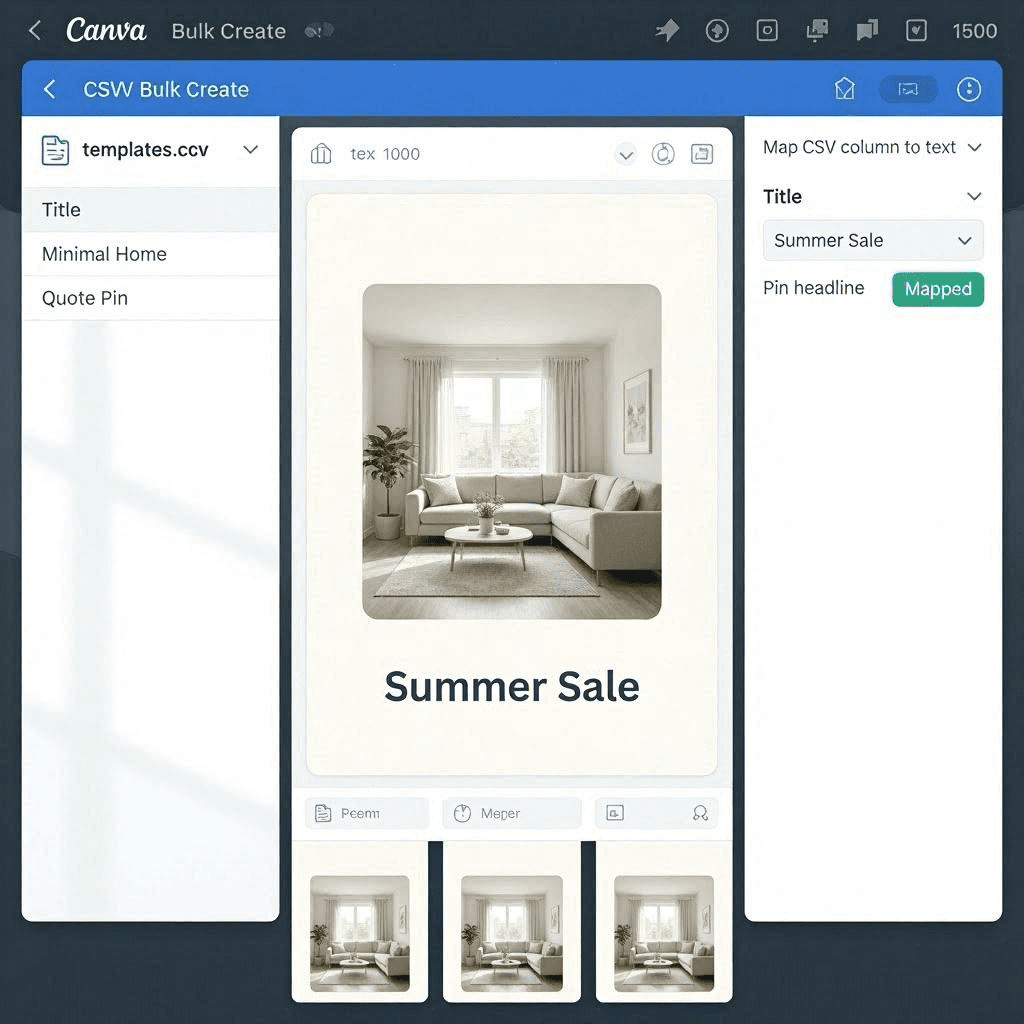
To maintain a strict two-hour weekly operational limit, you cannot design individual graphics daily. You must utilize Canva’s “Bulk Create” tool. You design one single, highly aesthetic, minimalist template graphic featuring a bold headline space and a sleek mockup of a digital document.
You then export your list of 30 AI-generated template titles into a CSV file. You connect this data file to your Canva template, and the software automatically generates 30 unique, perfectly formatted Pinterest pins in exactly three seconds.
SEO Title and Board Optimization
Pinterest ranks content based on how accurately the visual pin is described by its accompanying text. Your AI assistant will generate click-worthy, SEO-friendly titles for every pin. Ensure your pins are saved to highly specific boards.
A board titled “Business Tips” is too broad. A board titled “Notion Templates for Freelance Designers” is perfectly optimized for high-ticket SaaS affiliate funnels on Pinterest. When a user clicks your aesthetic pin, they are routed directly to your WordPress template library, where your recurring affiliate links are waiting.
Deploying an Autonomous AI Agent
If you want to completely remove yourself from the weekly ideation grind, you must deploy an autonomous AI Agent. An AI Agent, built via platforms like Lindy.ai or Zapier Central, can execute multi-step workflows automatically in the background without requiring continuous manual prompting.
Instead of doing the weekly research yourself, you “hire” the agent to do the heavy lifting. You program the agent with a specific persona, instructing it to act as an expert B2B affiliate marketer. You set a weekly trigger task for the agent to scrape the web for trending operational problems in your chosen niche.
The Automated Weekly Output
You configure the agent so that every Friday morning, it autonomously outputs a complete content package. This package includes three new template concepts, the full text for the actual templates, the 300-word SEO blog introductions, and five optimized Pinterest pin titles and descriptions for each concept.
Your actual hands-on time is reduced to ten minutes of reviewing the agent’s report, fifteen minutes of bulk-creating the graphics in Canva, and fifteen minutes of scheduling the posts via Pinterest’s native scheduler. You are spending less than an hour a week managing high-ticket SaaS affiliate funnels on Pinterest that operate globally 24/7.
Structuring the Backend Funnel Architecture
To maximize the yield of your traffic, your backend architecture must be flawless. While you can drive traffic directly to an affiliate link, capturing the user’s email address first provides exponential long-term value.
The Opt-In Checkpoint
Instead of giving the template away immediately on the blog post, you route the user to a sleek, high-converting landing page built on Framer.ai or Payhip. The user must enter their email address to download the free PDF or Notion template link.
The Automated Delivery Sequence
Once the user opts in, an automated email marketing platform like Brevo or Sendinblue instantly delivers the asset. This initial delivery email contains your primary SaaS affiliate link. However, you now possess their direct contact information.
Over the next 14 days, your automated sequence will drip-feed them additional, highly valuable workflows and templates, each containing links to complementary SaaS products. You build a deep ecosystem of trust, drastically increasing the lifetime value of every single pin click generated by your high-ticket SaaS affiliate funnels on Pinterest.
Strategic Critique: Stress-Testing the Concept
To protect your asymmetric income models from structural failure and ensure long-term wealth maximization, we must subject this Pinterest automation strategy to a rigorous operational critique.
What are the problems with this idea that we are not seeing? The most glaring hidden problem is the high churn rate associated with B2B software trials. While the prospect of 50% recurring commissions is enticing, many solopreneurs and freelancers sign up for premium tools like Notion or Pipedrive, use them for a 14-day free trial, and cancel before the first billing cycle hits. If your high-ticket SaaS affiliate funnels on Pinterest only provide a basic template without teaching the user how to integrate the software into their daily habit loop, your conversions will evaporate into empty trials. Furthermore, Pinterest’s algorithm frequently updates its outbound link policies; aggressive affiliate linking without providing substantial native platform value can lead to sudden account shadowbans, destroying your traffic engine overnight.
What assumptions are we making that might not be true? We are making the core assumption that AI-generated templates and scripts will be inherently valuable and functionally accurate for high-level corporate professionals. If an HR manager downloads your AI-generated “Performance Improvement Plan” template and it contains legal inaccuracies or generic corporate fluff, your brand authority is instantly destroyed. We assume the AI will flawlessly mimic deep industry expertise, which is rarely true without heavy manual editing. We are also assuming that B2B decision-makers use Pinterest for software discovery as frequently as they use LinkedIn or Google search, which may overestimate the platform’s immediate transactional intent for enterprise-grade tools.
If this idea failed, what would be the most likely reason? If this automation pipeline fails to convert views into actual recurring revenue, the definitive reason will be a catastrophic breakdown in the value-to-offer alignment link. If your Pinterest graphic promises a revolutionary operational shortcut, but the landing page delivers a low-effort, generic text document heavily gated behind aggressive affiliate walls, viewers will bounce immediately. Automation without explicit, undeniable value results in zero conversions. If the user does not feel that your specific template saves them hours of frustrating administrative work, they will never feel compelled to invest in the premium software required to run it, causing your high-ticket SaaS affiliate funnels on Pinterest to flatline completely.