7 Proven Steps to Create Minimalist Coloring Books with AI for Insane Passive Income in 2026!
The digital product gold rush is evolving, and learning how to create minimalist coloring books with AI is currently one of the most efficient ways to build a high-margin product suite. Gone are the days of manually illustrating every page or paying expensive freelance artists for simple line art.
By leveraging advanced image generators, you can spin up entirely new intellectual property in hours. This is especially powerful if you are reviving a dead brand or looking for low-maintenance digital products to sell via visual search engines like Pinterest.
Here is the exact workflow to test this digital product experiment.
The “Quick Answer” / Key Takeaways Box
- Niche Down Early: Focus on specific aesthetic themes like “boho minimalist” rather than generic designs.
- The Big 3 Tools: Midjourney v5.2, DALL-E 3 (via ChatGPT), and Creative Fabrica (CF) Spark are your primary generation engines.
- Prompting is Everything: Use specific keywords and style tuners to keep your line art consistent and clean.
- Quality Control: AI will make mistakes; expect to spend time cleaning up unusable images, resizing, and removing odd artifact lines before compiling your final book.
Building the Word Bank
Before you touch an AI generator, you need a highly specific vocabulary list. Broad prompts yield messy, unusable results.
Instead of typing “draw a room,” use an AI text generator to give you a list of 20 highly specific niche terms. For a boho minimalist theme, your target list should include specific items like woven baskets, linen bedding, macramé wall hangings, jute rugs, rattan chairs, and seagrass baskets.
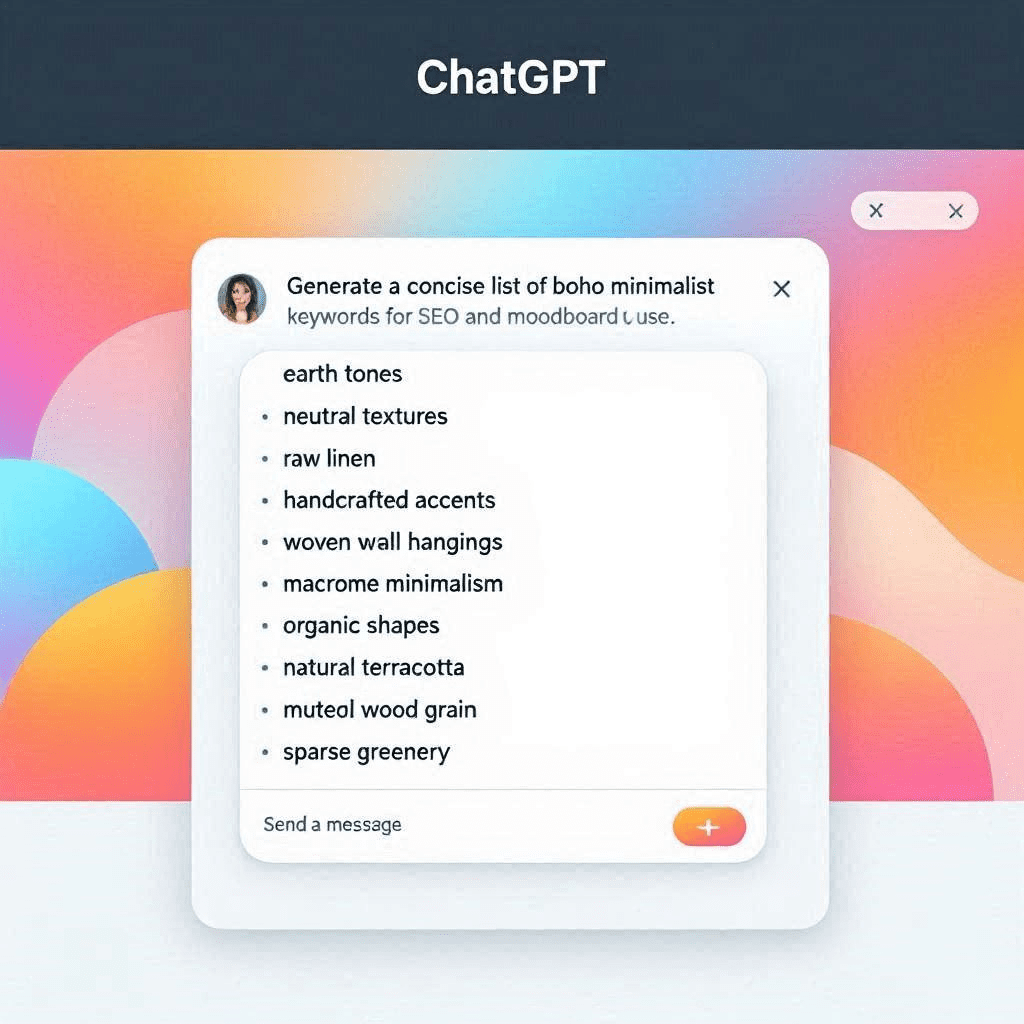
Having this phrase list prepared in advance drastically speeds up your workflow when you sit down to run your image prompts.
The Midjourney Workflow
Midjourney is arguably the fastest AI image generator on the market, allowing you to run batches ranging from 4 up to 160 images at a time.
For coloring pages, you must explicitly tell the bot you want “black and white line art” in your prompt. Interestingly, while the default model frequently updates, the most reliable version for this specific aesthetic is Midjourney Model V5.2. You can adjust this by typing /settings and selecting V5.2, or by appending --v 5.2 to your prompt suffix.
To lock in a consistent aesthetic across your entire book, utilize a “style tuner”. This is a unique code added to the end of your prompt (e.g., --style DdmwukEc) that forces the AI to adhere to a specific visual framework. Expect a 25% to 50% usability rate; some images will need to be discarded.
DALL-E and the “Coloring Book Hero”
If you prefer an interface that feels more conversational, DALL-E inside ChatGPT is excellent at maintaining a consistent artistic style.
To optimize the output, navigate to the GPT store on the left sidebar and search for a custom GPT named “Coloring Book Hero”. Because this specific GPT is pre-trained on what a coloring page requires, you don’t even need to include the phrase “coloring page” in your prompt. Keep your prompts simple.
The main downside here is the strict rate limit; you may hit a usage cap and have to wait before generating more pages.
[INTERNAL LINK: Read our ultimate guide on building autonomous AI Agents for content creation.]
CF Spark for Whimsical Designs
Creative Fabrica’s built-in generator, CF Spark, is another powerful alternative. By selecting the coloring pages option, CF Spark generates four simultaneous images in either portrait, landscape, or square dimensions.
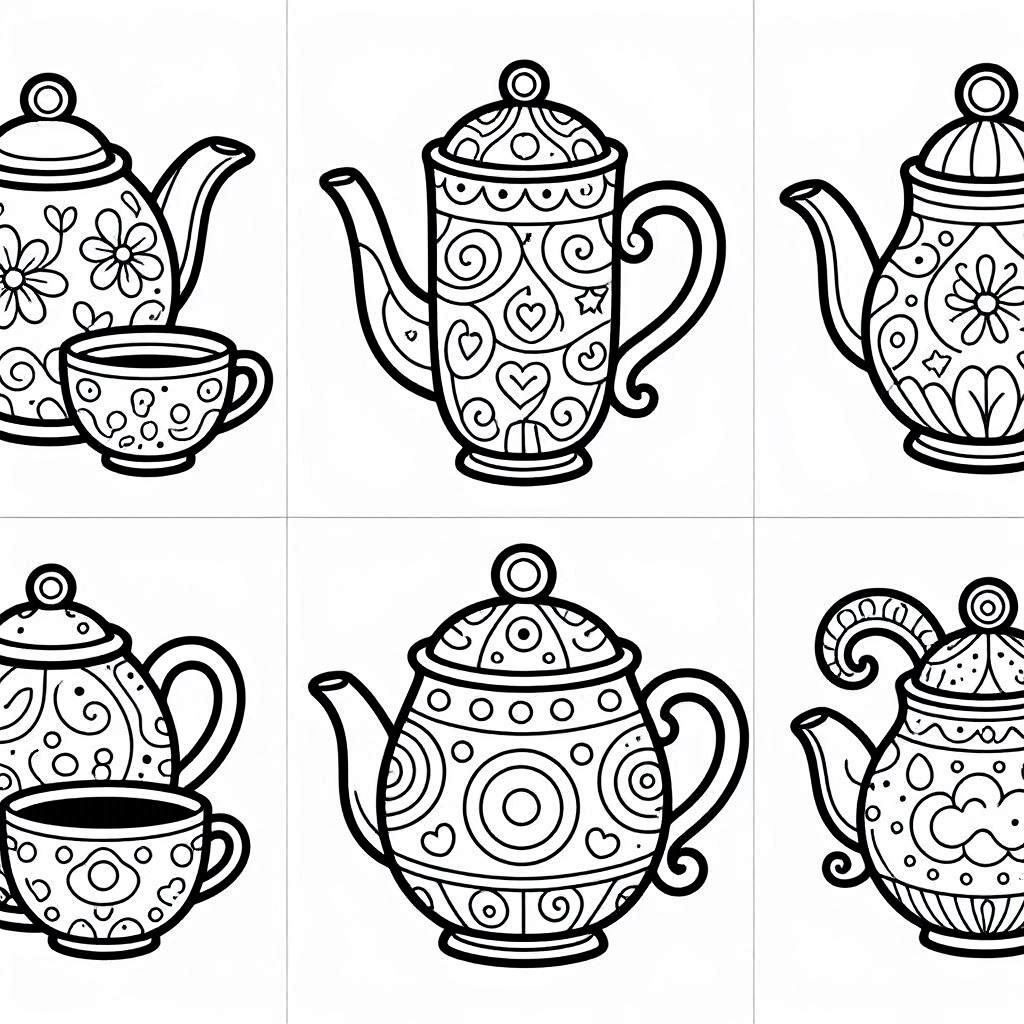
Without setting strict parameters, the default output style leans heavily toward the whimsical. A simple prompt like “coffee cup” or “teapot” will yield stylized, imaginative results. For more precise control over the output, utilize the built-in prompt builder to adjust the art medium and details.
The Affiliate / Monetization Section: Scaling the Operation
To turn this workflow into a reliable income stream, you need the right software stack to package and sell the assets. Here are the premium tools to leverage:
- Midjourney & Discord Subscriptions: Essential for high-volume generation. While free tiers sometimes exist, a one-month paid subscription is highly recommended to unlock commercial rights and speed.
- Creative Fabrica All Access (via PartnerStack/ShareASale): If you are teaching others this method, link them to Creative Fabrica. It provides access to CF Spark, plus thousands of pre-made PLR (Private Label Rights) graphics they can mix with their AI images.
- Canva Pro (via Impact): Once your AI images are generated, they must be compiled into a PDF. Canva Pro is the ultimate layout tool for this, allowing you to drag and drop your line art into a perfectly sized 8.5×11 inch document.
- Payhip or LemonSqueezy: Since certain payment gateways have strict geographic limitations for international sellers, platforms like Payhip are excellent for hosting and delivering your final digital PDF directly to customers.
Check out Creative Fabrica’s official licensing rules for AI-generated content.
Strategic Critique: Stress-Testing the Concept
What are the problems with this idea that I’m not seeing? The sheer volume of cleanup required. AI generators frequently produce “hallucinated” lines—floating artifacts, impossible geometry, or lines that just abruptly end. In a coloring book, the end user needs enclosed spaces to color. If you do not meticulously erase and fix these confusing, odd lines in a photo editor before publishing, you will inevitably frustrate the buyer and receive negative reviews.
What assumptions am I making that might not be true? You are assuming that generating the images is the hardest part. It isn’t. The real bottleneck is traffic generation and distribution. A folder full of beautiful, perfectly formatted boho minimalist PDFs is worthless if no one sees them. You cannot rely solely on organic marketplace search because those platforms are completely saturated with low-effort AI books. You must build an external traffic engine, such as an automated Pinterest workflow or targeted short-form video content, to drive buyers to your specific sales page.
If this idea failed, what would be the most likely reason? Lack of extreme niching. If you create a “Boho Minimalist Coloring Book,” you are competing against thousands. If it fails, it is likely because the target audience was too broad. The winners in this space target micro-niches (e.g., “Boho Minimalist Desk Setups for Remote Workers”). Failure usually stems from blending in with the generic AI masses rather than solving a specific aesthetic desire for a highly targeted subculture.