
Competitor Content Scraping Process Workflow: 7 Insane Steps to Reverse-Engineer a $1.3M Digital Product in 2026
The absolute fastest way to build a highly profitable digital product empire is through aggressive competitor content scraping. You do not need to invent a brand new business model or guess what your target audience wants to buy. Instead, you locate digital assets that are already generating massive revenue and systematically deconstruct their exact sales psychology.
By executing a precise competitor content scraping workflow, you can extract the exact copywriting frameworks, module structures, and pricing psychology used by top-tier creators. In this comprehensive case study, we will break down a highly successful 170-page parenting digital product that generated tens of thousands of sales. We will show you exactly how to reverse-engineer its winning formula to build your own automated, cash-flowing digital asset in less than thirty days.
The “Quick Answer” / Key Takeaways Box:
- Stop Guessing, Start Scraping: True digital wealth is built by modeling proven winners. Competitor content scraping eliminates product-market fit risk entirely.
- The Problem-Agitation Framework: Extract the exact emotional pain points your competitors use to hook readers, such as highlighting the “dark side” of mainstream solutions.
- Modular Product Architecture: Never write a digital guide blindly. Scrape the table of contents of best-selling products to build your exact informational skeleton.
- The Price Anchoring Hack: Learn how to position a $14 digital product against a $133 perceived value to trigger immediate impulse purchases.
- SaaS Automation Ecosystem: Deploy high-ticket software platforms to automate the entire funnel, completely removing yourself from daily operations.
Step 1: Identifying the Target Architecture for Competitor Content Scraping
The foundation of profitable competitor content scraping begins with identifying a target asset that is actively scaling. You are looking for digital products—like PDFs, video courses, or templates—that boast massive customer reviews and highly refined sales pages. In our core case study, we identified an incredibly lucrative 170-page digital guidebook focused on alternative parenting strategies for children with severe focus and behavioral challenges.
This specific product boasted over 93,105 satisfied customers and 834 verified reviews with a 4.8-star average. When you see numbers like this, you immediately know the sales copy is converting cold traffic into cash at an elite level. Your competitor content scraping process must isolate the exact variables driving these conversions.
First, analyze the pricing architecture. The product is positioned as a “Youth Day Sale” priced at a highly accessible $14, marked down from a list price of $133. This 89% discount creates massive urgency and eliminates buyer hesitation. By documenting these exact price points during your competitor content scraping phase, you establish the baseline financial metrics required to structure your own irresistible digital offer.
Step 2: Scraping the Copywriting and Emotional Hooks
A high-converting sales page does not rely on logical features; it relies on deep emotional triggers. Your next phase of competitor content scraping involves extracting the exact copywriting frameworks used to agitate the buyer’s pain points.
In our targeted parenting guide, the creator aggressively attacks the mainstream solution: dangerous behavioral medication. The copy highlights the “Dark Side” of medication, listing terrifying side effects like insomnia, high blood pressure, and severe mood disturbances. It points out the ultimate frustration that medication wears off by 5 PM, leaving parents to deal with impulsive outbursts and schoolwork battles completely unassisted.
When conducting competitor content scraping, you must extract these specific emotional contrast mechanisms. How does the competitor position their product as the ultimate, natural savior? The target copy promises to help children “unlock their hyper-focus state” and “independently complete chores” without expensive therapy or dangerous drugs. You must adapt this exact Problem-Agitation-Solution (PAS) framework for your own niche, ensuring your sales page hits the identical emotional chords that force a consumer to pull out their credit card.
Step 3: Extracting the Product Modular Skeleton
You should never stare at a blank page when drafting your digital product. The most valuable aspect of competitor content scraping is extracting the master table of contents from a proven winner. High-ticket creators spend months optimizing the logical flow of their information.
By analyzing the sales page of the $14 parenting guide, we can scrape the exact ten-part modular structure required to build a comprehensive, 170-page digital asset. The guide begins with “Part 1: Thriving With the Unique Brain,” establishing the biological needs and mapping out a “Mental Traffic Jam” checklist. It then moves into “Part 2: Lifestyle Architecture,” focusing on subtle environmental tweaks to eliminate household distractions.
Your competitor content scraping workflow must map out every single module promised on the sales page. The target product includes highly specific frameworks like the “Finisher Framework” for schoolwork, the “Independent Chore System,” and “Outburst Prevention Strategies.” By scraping these exact chapter promises, you generate an infallible master outline for your own writing process, ensuring your final product directly addresses every single micro-problem the market wants solved.
Ultimate Guide to AI Product Outlining
Step 4: Scraping the Authority and Risk Reversal Mechanisms
Consumers are highly skeptical of cheap digital products. To overcome this, top-tier funnels utilize massive authority building and aggressive risk reversal. Your competitor content scraping must document exactly how the target creator builds immediate trust with a cold audience.
In the targeted case study, the creator positions themselves as a veteran special education teacher with over forty years of practical experience and sixteen best-selling books. Even if you are utilizing a faceless brand, you must establish deep authority. You can achieve this by citing massive research hours, leveraging expert interviews, or utilizing a highly professional pen name backed by verified case studies.
Furthermore, the target page deploys an aggressive 90-day, no-questions-asked money-back guarantee. The copy explicitly states that the buyer can read the entire e-book 100% risk-free, and if it fails to exceed expectations, they get their full investment back and keep the materials. When executing your competitor content scraping, realize that this extreme risk reversal is mandatory for converting skeptical social media traffic. You must integrate an identical guarantee into your own checkout pages.
Step 5: Automating the Funnel with Premium SaaS Infrastructure
Extracting the perfect sales copy through competitor content scraping is useless if you cannot deliver the product flawlessly. To handle massive transaction volumes without hiring a support team, you must deploy elite, automated software infrastructure. You cannot rely on manual email delivery when processing hundreds of daily orders.
To host your highly optimized sales page and process global payments, utilize modern digital storefronts like Payhip or Framer. These platforms allow you to build beautiful, high-converting landing pages that perfectly mimic the structure you scraped from your competitors. The exact second a customer processes their $14 payment via Stripe, the platform automatically generates a secure, encrypted download link and fires the digital file directly to their inbox.
To maximize the lifetime value of your customers, you must build a robust backend ecosystem. By integrating elite email marketing software, you can capture every buyer’s contact information and automatically pitch them higher-ticket consulting services. Managing your software stack through premium B2B affiliate networks allows you to streamline overhead. Networks like PartnerStack provide centralized dashboards to manage your SaaS tools while offering lucrative recurring commissions if you recommend these platforms to other digital creators.
Explore PartnerStack for B2B Software Solutions
Step 6: Scraping the Bonus Architecture
One of the most critical elements revealed during deep competitor content scraping is the strategic use of digital bonuses. A $14 PDF alone rarely converts cold traffic. You must overwhelm the buyer with perceived value.
Our target case study explicitly offers “6 FREE BONUSES (Total Value $74)” strictly for purchasing today. These bonuses are not random; they are highly actionable implementation tools. The creator provides printable chore charts, schoolwork routine checklists, and morning routine templates. This removes all the friction for a busy parent trying to implement a 170-page text document.
When you conduct competitor content scraping, document every single bonus offered by the market leader. You must then engineer your own suite of quick-action templates, cheat sheets, and printables. These digital bonuses cost absolutely zero dollars to replicate and distribute, yet they artificially inflate the perceived value of your offer, acting as the final psychological tipping point that triggers a purchase.
Step 7: Reverse-Engineering the FAQ Objection Handling
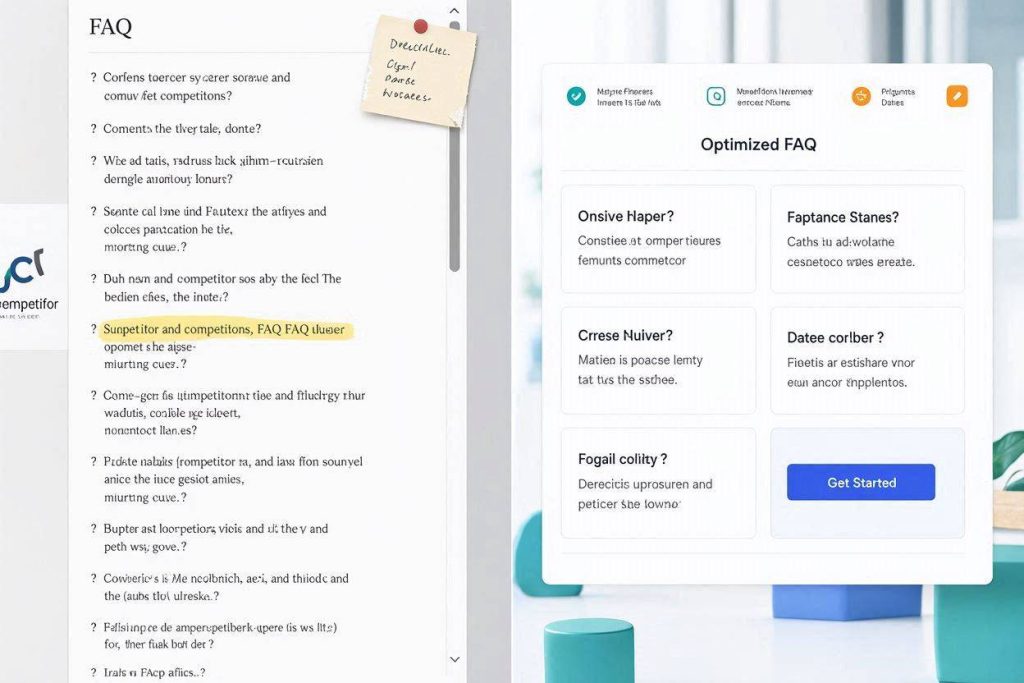
The final piece of the competitor content scraping puzzle is the Frequently Asked Questions section. The FAQ is not there to provide neutral information; it is a highly calibrated sales tool designed to crush the final lingering objections in the buyer’s mind.
By scraping the target sales page, we see exactly what the audience fears. The first scraped question is: “What if I don’t have time to implement this system right now?” The brilliant copywriting response flips the objection: “How much time would you SAVE if you didn’t have to deal with daily tantrums?” Another scraped objection asks if the system works for specific disorders like Autism or severe anxiety. The copy reassures the buyer with claims of forty years of bulletproof testing across thousands of unique cases.
You must copy these exact scraped questions into your own digital product funnel. If a market leader is dedicating precious sales page real estate to answering a specific question, it means their data shows that objection is actively killing their conversions. By utilizing competitor content scraping to build your FAQ section, you preemptively destroy buyer hesitation before they even have a chance to abandon their shopping cart.
Strategic Critique: Stress-Testing the Concept
What are the problems with this idea that we are not seeing? The most glaring hidden danger with aggressive competitor content scraping is crossing the legal and ethical line between modeling a framework and blatant copyright infringement. If your scraped sales page, module titles, and copywriting hooks are too identical to the original creator’s work, you invite severe legal action. Payment processors like Stripe and PayPal will instantly permanently ban your merchant accounts if they receive verified DMCA takedown notices. Furthermore, simply scraping a beautiful sales page does not miraculously generate the high-quality, 170-page interior content required to fulfill the promise. If your actual product is garbage, your refund rates will skyrocket, triggering massive chargeback fees that will bankrupt your operation.
What assumptions are we making that might not be true? This entire workflow makes the massive assumption that you can successfully drive the exact same high-intent, targeted traffic to your cloned funnel as the original creator. We are assuming that a $14 price point will automatically trigger impulse buys. In reality, the original creator likely spent years building a massive organic brand presence, an engaged email list, or utilized a highly optimized, high-budget Facebook ad account seasoned with thousands of conversion pixels. We are assuming cold, top-of-funnel social media traffic will convert at the same 2-3% rate as a warm, retargeted audience, which is statistically highly improbable for a brand new creator.
If this idea failed, what would be the most likely reason? If a digital product launch built heavily on competitor content scraping fails entirely, the absolute most likely point of failure is an inability to generate cheap, qualified top-of-funnel traffic. You can possess the greatest, most perfectly scraped and optimized sales page on the internet, but if no unique human visitors are clicking your link, your revenue will be zero. If your faceless social media videos fail to go viral, or if your advertising costs per click exceed your $14 profit margin, the entire automated business model collapses instantly due to negative cash flow.